Upskilling During Internships: The Secret to Staying Relevant
The professional world is changing faster than ever. New technologies, tools and working methods are constantly reshaping industries. Skills that are valuable today may need to be updated tomorrow.
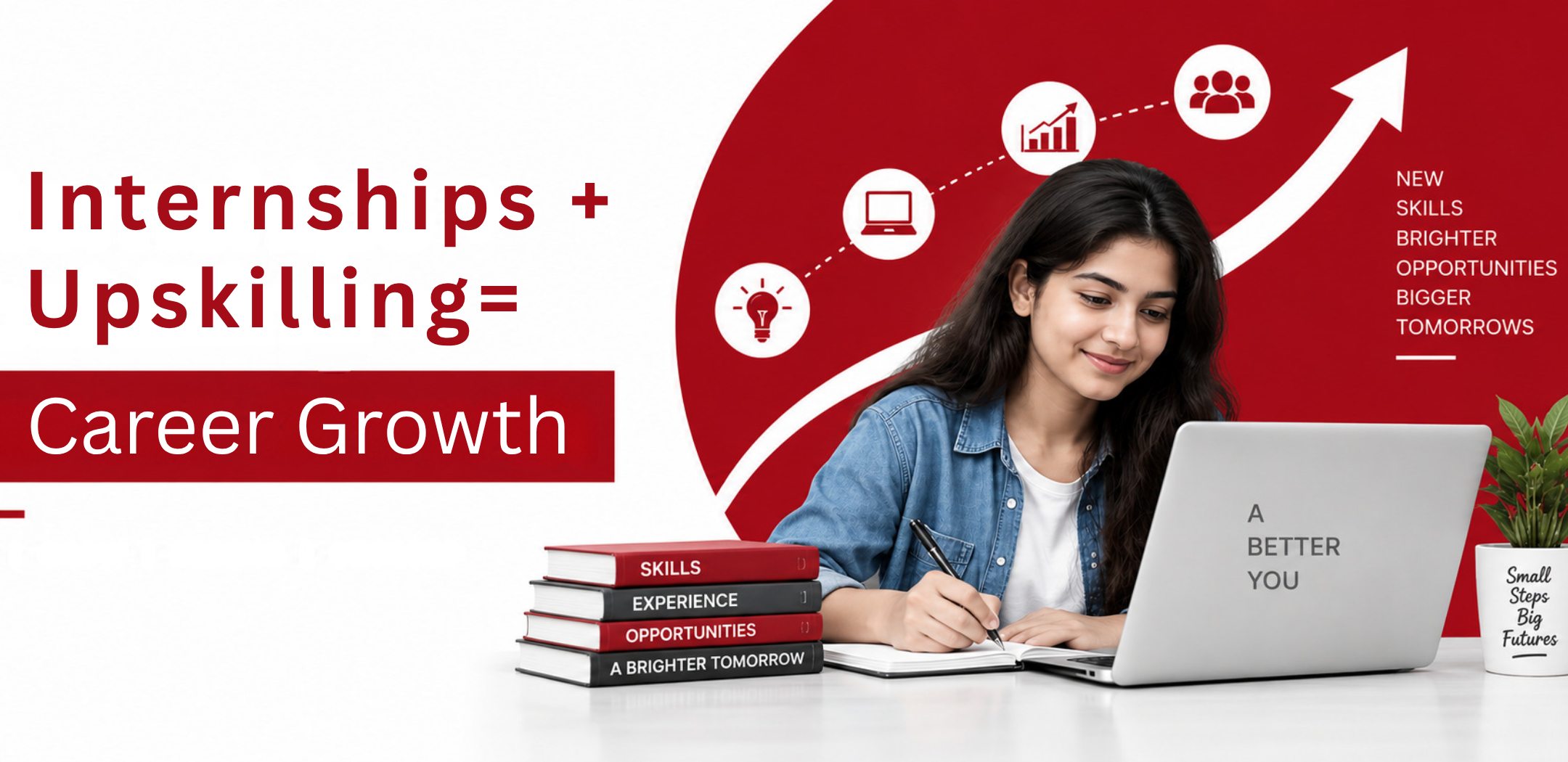
This is why an internship should be more than an opportunity to gain workplace exposure. It should also become a period of continuous learning and professional upskilling.
An internship gives students and young professionals something classrooms often cannot: the opportunity to learn while solving real problems.
Internships Are Learning Accelerators
Internships allow you to apply what you already know, but their real value comes from everything you learn along the way.
During an internship, you may be introduced to new tools, emerging industry trends, different departments, workplace processes and challenges that cannot always be recreated in an academic environment.
The interns who grow the most are usually those who treat every task as an opportunity to understand something new.
Instead of simply completing an assignment, they ask:
Why is this being done this way?
Can this process be improved?
What new skill can I learn from this task?
That mindset can transform an ordinary internship into a powerful learning experience.
Move From Execution to Understanding
There is a significant difference between completing a task and understanding the purpose behind it.
Upskilling begins when interns move beyond simply following instructions.
They learn why certain decisions are made, how their work contributes to a larger objective and how different functions within an organisation work together.
The goal should gradually shift from:
“What do I need to finish?”
to:
“What can I learn from this?”
That shift encourages curiosity, problem-solving and independent thinking—skills that remain valuable long after an internship ends.
Small Skills Can Make a Big Difference
Upskilling does not always mean learning complicated software or completing another certification.
Some of the most valuable professional skills are developed through everyday work.
Writing clearer emails, managing deadlines, organising tasks, asking better questions, presenting an idea confidently and communicating effectively with colleagues may appear to be small improvements.
But these micro-skills compound over time.
Someone who continuously improves these abilities can become significantly more effective in a professional environment.
Upskilling Helps You Stay Relevant
Industries evolve. Job roles change. Employer expectations increase.
Professionals who continue learning are better prepared to adapt to these changes.
An internship provides an ideal environment to start building this habit early. Interns can explore new technologies, observe industry developments, learn from experienced professionals and understand which skills are becoming increasingly important within their chosen field.
Staying relevant does not mean knowing everything.
It means being willing and prepared to keep learning.
Internships Can Build Career Ownership
One of the most important outcomes of continuous upskilling is career ownership.
When interns actively take responsibility for their learning, they stop waiting for someone else to define their development.
They begin seeking mentors, exploring new areas, identifying their strengths and understanding what kind of work genuinely interests them.
This self-awareness can help them make more informed career decisions in the future.
Make Every Internship a Learning Opportunity
An internship should not be measured only by the number of projects completed or the certificate received at the end.
Its real value lies in how much the experience helps you grow.
Learn intentionally. Ask questions. Experiment with new tools. Observe how experienced professionals solve problems. Improve one small skill at a time.
And regularly ask yourself:
“What am I learning today that could make me more valuable tomorrow?”
Because professional relevance is not something we achieve once.
It is something we continue building through learning, adaptability and upskilling.